Big, Thin Dutch Pancakes (Pannenkoeken) for Dinner
Learn to make Dutch pannenkoeken, the large, thin pancakes eaten for dinner in the Netherlands, with sweet and savory toppings the whole family can choose.
- Total time: 40 min
- Serves 4
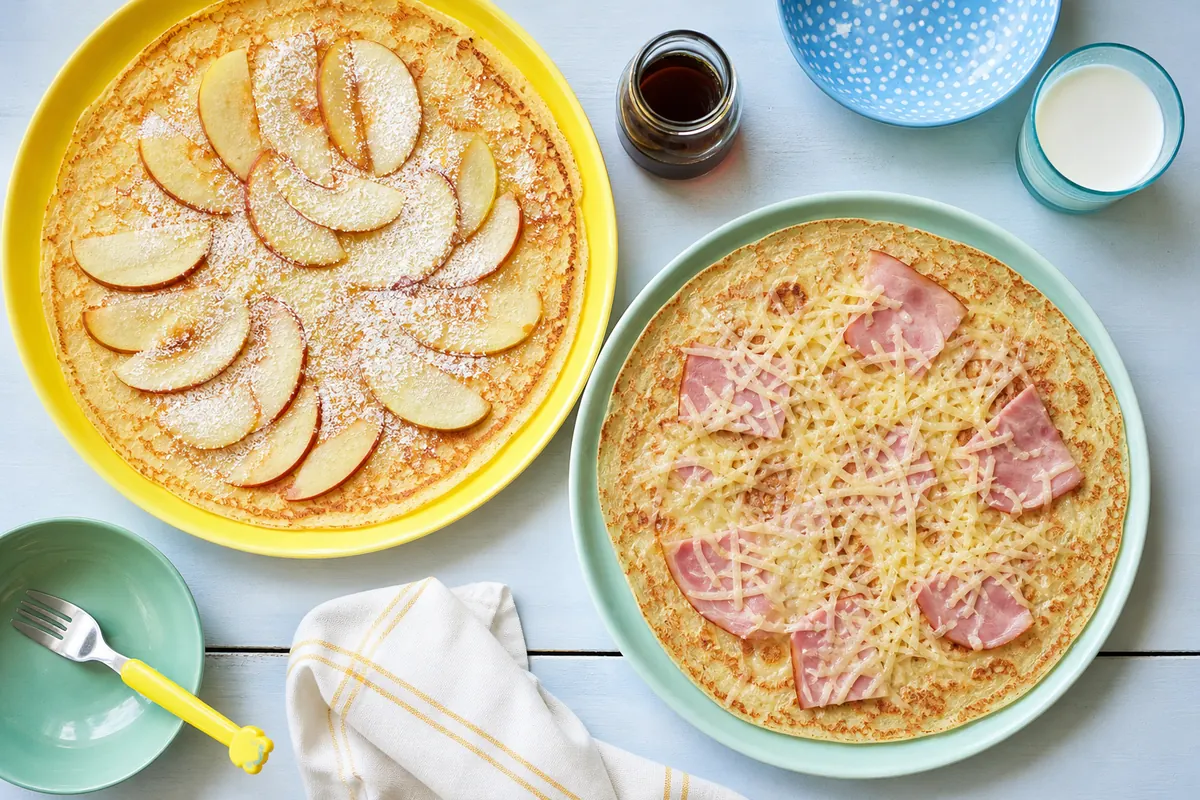
In the Netherlands, pancakes are not just breakfast. Pannenkoeken are often eaten for dinner, and there are entire restaurants called pannenkoekenhuizen, or pancake houses, that serve nothing else. Dutch children consider pancake night a highlight of the week.
A Dutch pannenkoek is large, often the size of a dinner plate, and thinner than an American pancake but a little thicker than a French crêpe. It is made without baking powder, so it stays flat. The toppings range from sweet to savory, and many are cooked right into the batter.
Sweet or savory, or both
The most popular savory option is spek, or bacon. Strips of bacon are fried in the pan first, then the batter is poured over them so they become part of the pancake. Cheese is another favorite, and the combination of bacon and cheese is a classic. On the sweet side, thin slices of apple, raisins or a sprinkle of cinnamon sugar are common.
Whatever goes into the pancake, the most typical topping is stroop, a thick, dark Dutch syrup, or a dusting of powdered sugar, which the Dutch call poedersuiker. Maple syrup or golden syrup works well if you cannot find Dutch stroop.
Recipes for the basic batter are surprisingly consistent across Dutch households. The classic version on makkelijke-recepten.nl is a good reference if you want to see how Dutch home cooks write it out, and translation tools handle it well.
The recipe
- Prep 10 min
- Cook 30 min
- Makes about 8 large pancakes
IngredientsTap to check off
MethodTap a step when it is done
Tips for perfect pannenkoeken
Let the batter rest for at least 15 minutes. This gives the flour time to absorb the liquid and makes the pancakes more tender. If you have time, an hour in the fridge is even better.
The pan should be hot but not smoking. Use a large skillet, at least 10 inches across, and add a small pat of butter before each pancake. Swirl the batter quickly so it covers the whole surface in a thin layer. When the top looks dry and the edges start to lift, it is time to flip.
Keep finished pancakes warm on a plate in a low oven, covered loosely with foil. Or do what many Dutch families do and serve each one as soon as it is done, so everyone eats in turns.
Building a pancake bar
Set out small bowls of toppings so everyone can choose their own: grated cheese, cooked bacon, sliced apple, banana, raisins, powdered sugar and syrup. Children can make their pancake in the pan by adding toppings before the batter sets. To eat them the Dutch way, roll the pancake up and cut it into slices, or just cut it into pieces with a knife and fork.
Pannenkoeken are an easy way to use up odds and ends in the fridge. Leftover ham, a handful of spinach or the last of the cheese can all go in. The result is a dinner that costs little, comes together quickly and gets very few complaints.