Sheet Pan Dinners for Busy Families
How to cook a whole family dinner on one sheet pan: the best protein and vegetable pairings, oven temperatures, timing tips and mistakes to avoid.
- 3 min read
- Guide
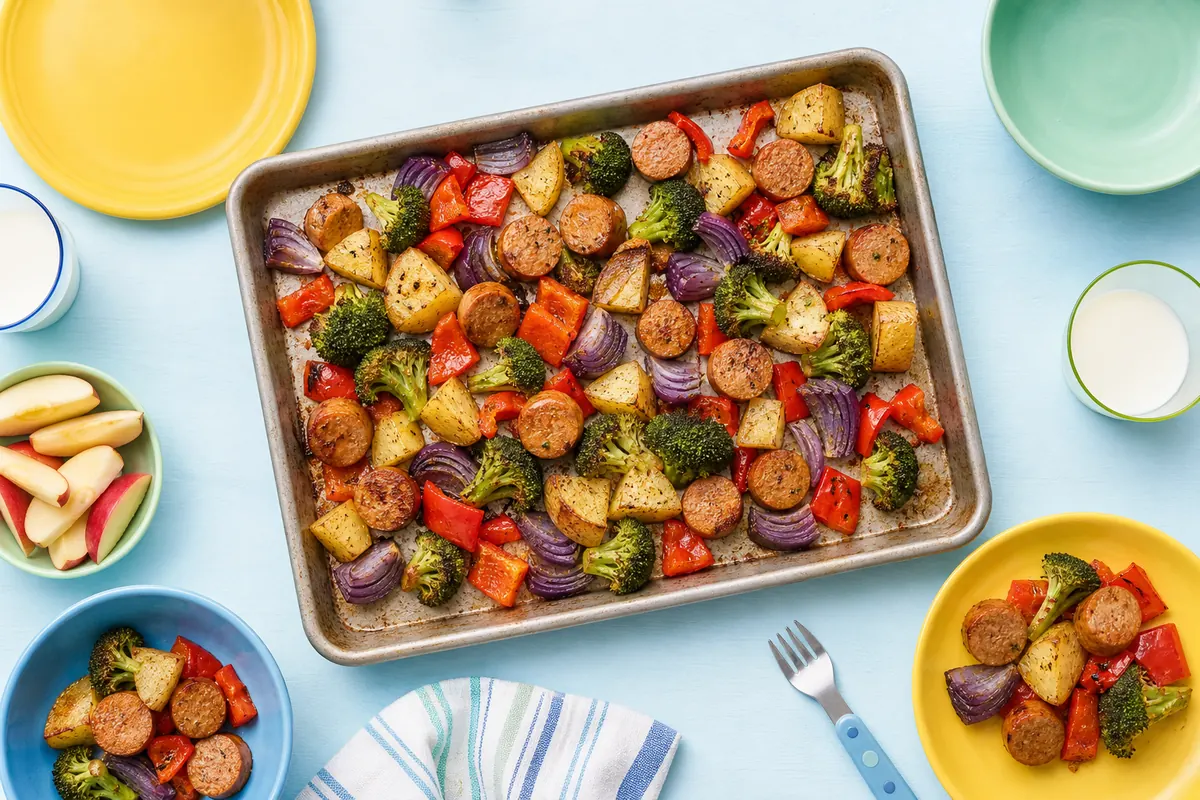
A sheet pan dinner is exactly what it sounds like: a protein and some vegetables, seasoned, spread on a baking sheet and roasted together. There is one pan to wash, very little chopping and almost no standing at the stove. For families who are tired by five o'clock, it is one of the most useful tricks in the kitchen.
The method is simple, but a few basics make the difference between a golden, flavorful dinner and a pan of pale, soggy food.
Start with the right pan and temperature
Use a heavy, rimmed baking sheet, the kind often sold as a half sheet pan, about 18 by 13 inches. Thin pans warp in a hot oven, and a rim keeps the juices from running onto the floor of the oven. Line it with parchment paper or foil if you want easy cleanup.
Most sheet pan dinners work best at 400°F to 425°F (200°C to 220°C). At that temperature, vegetables brown at the edges and the protein cooks quickly without drying out. Heat the oven fully before the pan goes in, and for extra browning, place the empty pan in the oven while it heats and add the food to the hot surface.
Do not crowd the pan
This is the most common mistake. When food is packed tightly, it steams instead of roasts. Leave a little space between pieces, and use two pans if you need to, swapping their positions halfway through. A single layer is the goal.
Match cooking times
The magic of a good sheet pan dinner is that everything finishes at the same moment. To make that happen, think about how long each ingredient takes and cut it accordingly.
- Long-cooking vegetables such as potatoes, carrots, sweet potatoes and winter squash: cut into pieces about 3/4 inch (2 cm) thick, and start them first.
- Medium vegetables such as broccoli, cauliflower, bell peppers, onions and Brussels sprouts: cut into larger pieces or add them 10 to 15 minutes into cooking.
- Quick vegetables such as zucchini, asparagus, green beans and cherry tomatoes: add them for the last 10 to 15 minutes.
Proteins vary the same way. Sliced sausages and shrimp need only 10 to 15 minutes. Chicken thighs, bone-in, need about 35 to 45 minutes. Salmon fillets take 12 to 15 minutes, so they go in at the end.
Combinations that work
Here are some pairings that most children accept:
- Sliced smoked sausage with potatoes, red onion and green beans
- Chicken drumsticks with sweet potato wedges and broccoli
- Meatballs with bell peppers and zucchini, served over rice or pasta
- Salmon with baby potatoes and asparagus
- Chickpeas, cauliflower and carrots with cumin and paprika, served with yogurt and flatbread
If you want more quick dinner ideas for school nights, our list of seven weeknight air fryer dinners uses the same simple approach of an oil and spice rub and very little hands-on time.
Season well and finish with something fresh
Toss everything with oil, about a tablespoon per pound of food, and season generously with salt, pepper and a spice or herb that suits the meal. Because roasting is a dry heat, a sauce at the end makes a big difference. Try a spoonful of yogurt, a drizzle of honey and mustard, a squeeze of lemon, a little pesto or grated Parmesan. Fresh parsley or chopped scallions add color and brightness.
Food safety
Check chicken with a thermometer. It should reach 165°F (74°C) in the thickest part, and ground meat such as meatballs should reach 160°F (71°C). Fish is done at 145°F (63°C). If you are cooking raw meat on the same pan as vegetables, keep it to one side and make sure the juices have fully cooked before you serve the vegetables.
Once you have made a few sheet pan dinners, you will find yourself improvising with whatever is in the refrigerator, and that is when the method becomes truly useful for a busy household.